
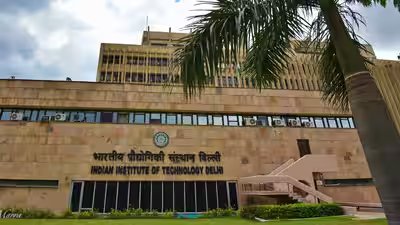
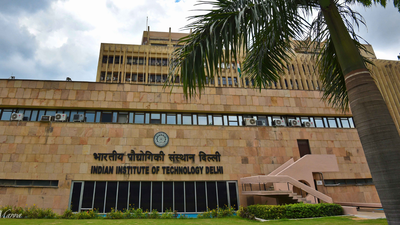
NEW DELHI: Researchers from the Indian Institute of Technology Delhi (IIT Delhi), in collaboration with the All India Institute of Medical Science (AIIMS) New Delhi and the Institute of Human Behavior and Allied Sciences (IHBAS), have developed the first Hindi version of Melodic Intonation Therapy (MIT) for stroke survivors with speech impairment.Music-based therapy is designed for people affected by post-stroke aphasia, a condition in which patients can understand language but have difficulty speaking. A pilot study conducted by the research team was published in the international journal Aphasiology.Hindi version of voice support systemMelodic Intonation Therapy uses melody and intonation to help improve speech skills by using the connection between music and language in the brain. Help has been available in several western languages, but an official Hindi version was not available before this study.The researchers adapted the Hindi MIT by changing the words, music and rhythms to match the stress and intonation of the language. The team worked on creating exercises that mimic the way Hindi speakers communicate in everyday life.Hindi is spoken by hundreds of millions of people, and the researchers noted that most of the aphasia therapy tools available in India are based on English language methods, which may not reflect the languages of Hindi speakers.Pilot training for stroke survivorsThe pilot study involved six Hindi-speaking stroke survivors who received 40 sessions each. Each session lasted between 45 and 60 minutes and was conducted by a speech therapist.All the participants completed the treatment program and showed changes that exceeded the thresholds that the doctors considered important. The researchers also reported improvements in sentence structure, improved speech and quality of life.“Patients were able to string together long sentences, spoke freely, and reported gains in their quality of life. There were no adverse effects,” Professor Rahul Garg, one of the researchers leading the study, said.Researchers highlight the need for additional studiesThe research team said that the findings are preliminary due to the small number of participants in the pilot study. Additional studies with larger cohorts will be needed to assess the effectiveness of the Hindi MIT approach.“Having only six patients, the results should be seen as a sign of initial strength rather than final evidence. The team is also investigating digital devices so that the treatment can reach patients better than private hospitals,” Prof. NM Anoop Krishnan, another researcher leading the study, said.Research collaborationThe study was led by Prof. NM Anoop Krishnan and Prof. Rahul Garg from IIT Delhi, along with Prof. Deepti Vibha from AIIMS New Delhi. Dushyant Soni, a PhD scholar at IIT Delhi’s National Resource Center for Value Education in Engineering (NRCVEE), and Rupanshi Ahuja, staff at IIT Delhi, were co-first authors.The research team included experts from AIIMS New Delhi and IHBAS, including speech pathologists, psychiatrists and ENT specialists. The collaboration brought together expertise from engineering, medicine and rehabilitation science.The study, titled “Hindi Adaptation of Melodic Intonation Therapy for Post-stroke Aphasia: A Pilot Feasibility Study”, has been published in Aphasiology.