
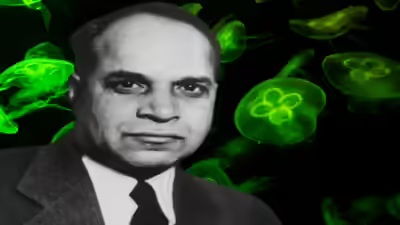
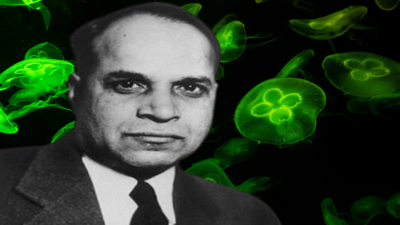
Every year, millions of people around the world take medicines that help fight cancer, treat autoimmune diseases, prevent birth defects or treat bacterial infections. Few of them know that many of these achievements can be traced to the work of an Indian scientist who devoted his life to medical research.His name was Yellapragada Subbarow(Subba Rao).He was not a Nobel Prize winner. He was rarely in the headlines. Even after many years since his death, scientists continue to see him as one of the greatest medical researchers of the 20th century. His story is about perseverance, scientific curiosity and an unwavering desire to prevent others from suffering as his family did.
A childhood shaped by losing someone
Born on January 12, 1895, in Bhimavaram in present-day Andhra Pradesh, Subbarow grew up in modest circumstances. His father, a Sanskrit scholar, died at a young age of tropical sprue, a disease that was not well understood at the time. Two of his brothers also fell ill.These personal tragedies left a lasting impression on him. They encouraged his desire to study medicine and understand the disease that had taken his loved ones.However, his educational journey was difficult. He failed his school exams twice and finally passed his third exam. Financial difficulties made higher education difficult, and his future father-in-law is known to have supported him by helping him buy medical books.After completing his medical studies in India, Subbarow went to the United States in 1922 with little money but with an incredible desire—to search for scientific research that would improve human health.
Harvard’s years of discoveries that revolutionized science
At Harvard Medical School, Subbarow joined the Department of Biochemistry and began working with chemist Cyrus Fiske.Together, they developed the Fiske-Subbarow method, a laboratory method for measuring phosphorus in biological samples. Originating in the 1920s, this technique became one of the most widely used methods in marine biology and remains important in laboratory medicine even today.Subbarow also pioneered the advancement of scientists’ understanding of phosphorus-containing compounds involved in the transfer of energy within cells, including adenosine triphosphate (ATP). ATP is now recognized as the primary energy-carrying molecule in living organisms and is essential to modern life.Although his scientific contributions earned him great respect in the research community, the recognition he received during his lifetime did not match the magnitude of his work.
A scientist whose work continues to save lives
In 1940, Subbarow joined Lederle Laboratories in New York, where he led research that would revolutionize medical treatment.Among his key findings was work related to folic acid, a vitamin that greatly improves cell growth. Today, folic acid supplementation during pregnancy is recommended worldwide because it helps reduce the risk of neural tube defects in babies.His research also laid the foundation for aminopterin, one of the first drugs to show remission in childhood leukemia. This pioneering work eventually led to methotrexate, a drug that remains an important treatment for several cancers and conditions such as rheumatoid arthritis and psoriasis.Subbarow’s leadership also contributed to the discovery of Aureomycin, the first tetracycline drug. This breakthrough opened the door to a whole family of antibiotics that continue to be used against a variety of bacterial infections around the world.Another important factor was the development of diethylcarbamazine (DEC), a drug that has been very effective in preventing lymphatic filariasis, also known as elephantiasis. Even today, the World Health Organization promotes DEC as part of programs aimed at eliminating the disease in several countries.
A legacy that continues long after his lifetime
Yellapragada Subbarow died in New York on August 8, 1948, at the age of 53.Although he did not receive some of the respect that later came to scientists working in similar fields, his influence on medical research has grown over time. Historians of science and medical researchers agree that his discoveries helped improve modern medicine and changed the lives of many patients around the world.India has honored his contributions in several ways, including issuing a commemorative stamp on his 100th birthday. His life story is also taught in many medical and scientific institutions as an example of perseverance and excellence in research.Yellapragada Subbarow’s journey reminds us that great scientific achievements are not always accompanied by fame. Sometimes, the most amazing legacy is found not in history books or award ceremonies, but in the medicine that quietly saves lives every day.Disclaimer: This article is based on publicly available history, scientific literature and information about Yellapragada Subbarow’s life and contributions. This article is intended to be educational and informative.